
What if AI could revolutionize your on-page SEO and boost your rankings overnight?
SEO is more competitive than ever, and staying on top can feel like a constant battle. Without the right tools, falling behind is almost guaranteed. But with AI, you can automate tedious tasks, optimize content at lightning speed, and create a seamless user experience that keeps visitors coming back.
Knowing how to use AI for on-page SEO is the secret weapon that could propel you ahead of the competition. Are you ready to transform your strategy and dominate rankings like never before?
What Is AI SEO and How It Works
AI SEO uses artificial intelligence and machine learning to reshape how content ranks and appears in search results. The approach analyzes large datasets to understand user intent, optimize for semantic search, and surface answers across AI platforms like ChatGPT and Google Gemini.
Core mechanisms include interpreting query meaning, generating and refining content using real-time data, and predicting emerging trends. Structured data improves clarity and indexing, while strong entity recognition builds authority. Tools like Semrush help scale these efforts, resulting in faster, data-driven SEO focused on visibility within AI-generated answers.
5 Benefits Of Using AI For On-Page SEO
1. Deeper Data Insights
AI processes large search datasets to uncover patterns that are hard to spot manually. It identifies user intent, content gaps, and ranking opportunities with precision, helping you align content with real search demand.
For example, tools like Semrush can reveal that users searching “AI SEO tools” also want comparisons, pricing, and use cases. This insight helps expand content into targeted sections that improve relevance, rankings, and visibility in AI-generated answers.
2. Scalable Content Optimization
AI enables optimization across hundreds of pages without sacrificing quality. It clusters keywords, strengthens internal linking, and refines the site structure, allowing content to expand on strong SEO foundations.
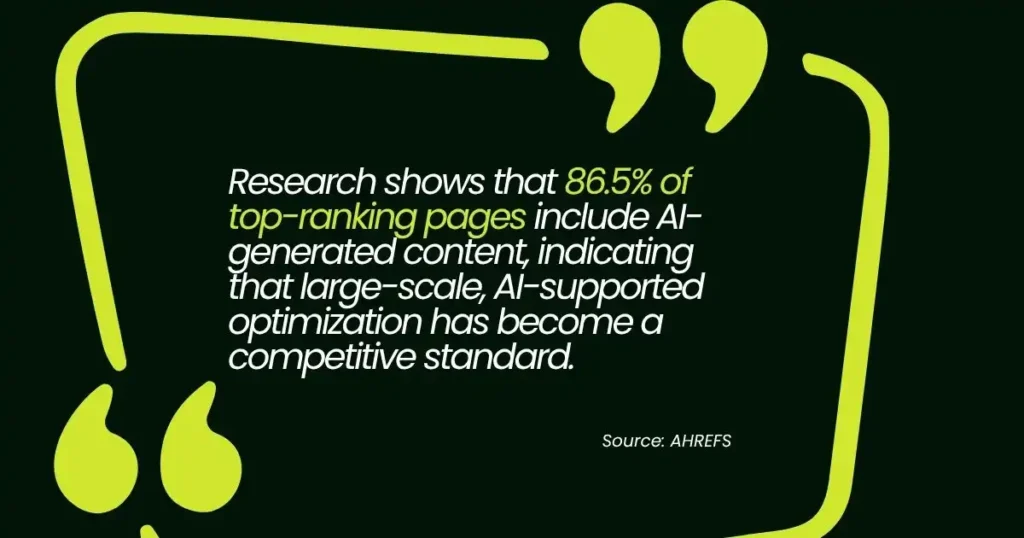
Research shows that 86.5% of top-ranking pages include AI-generated content, indicating that large-scale, AI-supported optimization has become a competitive standard.
Scaling content with AI strengthens topical authority and expands search visibility. A connected content network improves rankings and increases chances of appearing in AI-generated results.
3. Improved Efficiency And Speed
Tasks that once took hours now take minutes. AI delivers real-time outlines, audits, and on-page recommendations, removing delays and accelerating execution. Faster workflows free up time for strategy, testing, and growth that directly impacts rankings.
Where speed creates real SEO gains:
- Real-time audits: Instantly uncover gaps and issues
- Faster content creation: Produce outlines and drafts quickly
- Quick optimizations: Refine titles, headings, and structure
- Automated tracking: Monitor performance continuously
- Scalable execution: Optimize multiple pages at once
Greater speed leads to quicker results, stronger consistency, and a clear advantage in competitive search environments.
4. Consistency Across Pages
AI enforces consistent SEO standards across every page, eliminating gaps that weaken rankings. Uniform keyword usage, structured headings, and aligned signals make content easier for search engines to understand and trust. A consistently optimized site builds authority faster and maintains stronger visibility in competitive results.
Inconsistency slows growth and reduces reach. A unified structure across all pages improves crawlability, strengthens topical authority, and increases chances of appearing in both search rankings and AI-generated answers.
5. Cost Efficiency For Growing Teams
AI reduces the need for large teams to handle repetitive SEO tasks, cutting operational costs while allowing growing businesses to compete at a higher level. Time-heavy work like keyword research, competitor tracking, and content optimization runs faster and with fewer errors, giving teams more room to focus on strategy and revenue-driven decisions.
A small eCommerce brand with hundreds of product pages can scale without hiring a full SEO team. AI can generate keyword clusters, optimize product descriptions, and track rankings across the entire catalog with minimal effort. Growth increasingly relies on execution speed, creating a strong edge in competitive markets.
How AI Is Transforming On-Page SEO
On-page SEO has evolved significantly, with the approach to how search engines rank content relying heavily on AI. How to use AI for on-page SEO has become a must for modern optimization strategies. Search engines have become much more accurate with intent, experience, and value. If you want to keep your rankings safe, do not stay the same.
The shifts below break down exactly what is changing and where your focus needs to be right now:
| Key Shift | What’s Changing | Why It Matters | What You Should Focus On |
| Search Engines Rely More on AI | Algorithms now interpret context, meaning, and relationships between topics instead of matching keywords alone | Rankings depend on how well content aligns with real user needs, not keyword density | Build topic depth, use natural language, and connect related ideas across pages |
| User Intent Is the Core Ranking Factor | Search engines prioritize content that directly answers what users are looking for | Content that misses intent struggles to rank, even with strong SEO signals | Match search intent precisely, answer questions clearly, and avoid vague content |
| User Experience Signals Drive Rankings | Engagement metrics like time on page, bounce rate, and interaction influence visibility | Poor experience leads to lost rankings even with optimized content | Improve readability, structure content well, and guide users through the page |
| Page Speed and Performance Still Matter | Fast-loading, stable pages are favored in search rankings | Slow pages increase drop-offs and reduce conversions | Optimize images, reduce scripts, and improve Core Web Vitals performance |
| Helpful Content Remains Critical | Content must provide real value, not surface-level information | Thin or generic content gets ignored or filtered out | Create in-depth, useful content that solves real problems and builds trust |
Each shift listed above reflects how fast the SEO landscape is evolving. Businesses that act early gain a clear advantage, and having the right guidance makes that shift faster and more effective.
5 Practical Ways to Use AI for On-Page SEO
1. Keyword Intent Analysis
If you’re still guessing what a keyword means, you’re falling behind. In today’s SEO game, understanding user intent is non-negotiable. Search patterns, user behavior, and query phrasing can reveal exactly what people want to see when they land on your page.
To make sure you’re on the right track, here’s how you can optimize for intent:
- Group keywords by intent to target what users need
- Match content to intent for more relevant answers
- Identify content gaps to outpace competitors
If you’re not optimizing for intent, your content is falling short. Aligning content with how to use AI for on-page SEO enhances search relevance and ensures your pages address the true needs of users, improving engagement. Real SEO growth comes when your content matches what searchers want.
2. Content Optimization
Content optimization becomes faster and more precise with AI. It evaluates readability, keyword placement, topical depth, and structure in seconds, providing data-backed suggestions that improve clarity and relevance without keyword overstuffing.
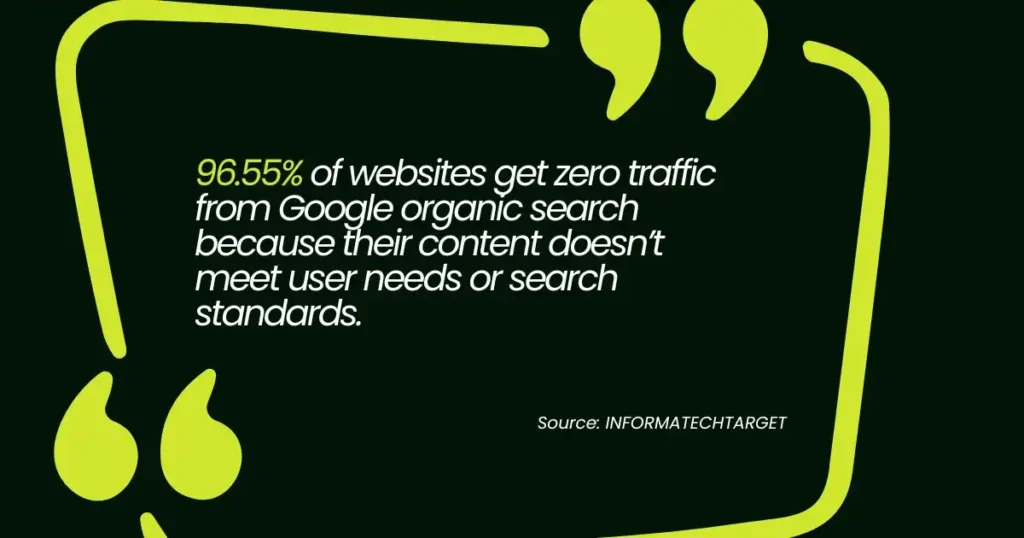
Gaps in topic coverage are costly. A significant portion of pages fail to attract traffic because they’re incomplete or lack depth. According to Ahrefs research, 96.55% of websites get zero traffic from Google organic search because their content doesn’t meet user needs or search standards. Without comprehensive, valuable content, your pages will struggle to rank and engage users.
3. Search Engine Results Page (SERP) Analysis
Mastering the Search Engine Results Page (SERP) helps you dominate search rankings. AI uncovers patterns in high-ranking pages, such as headings, content structure, and featured snippets, that make content stand out. For example, the top results for “best SEO tools” often feature in-depth comparisons and practical guides with clear, actionable headings.
With this knowledge, you can create content that directly competes with these top pages. For instance, searches for “how to start a blog” often show step-by-step guides and tips on common mistakes. Adding your own unique angle, like fresh insights or the latest trends, makes sure your content ranks and stands out in a crowded market.
4. Internal Linking
Internal linking is an important SEO strategy that’s often overlooked. AI can identify missed opportunities and suggest relevant pages to connect based on context and topic similarity, improving navigation for both users and search engines.
Implementing an effective internal linking strategy unlocks a range of SEO benefits:
- Improved Crawlability: Helps search engines index your site, increasing the chances of ranking higher.
- Distributes Authority: Spreads link equity across your pages, enhancing their visibility.
- Better User Experience: Engages visitors longer, guiding them to related content.
- Stronger Site Structure: Enhances overall SEO, supporting better rankings over time.
Prioritizing internal linking strengthens your site’s structure, boosts rankings, and keeps visitors engaged. Start optimizing your links now to stay ahead of the competition.
5. FAQ Generation
AI identifies relevant questions based on real search queries and user behavior, allowing you to naturally target long-tail keywords without disrupting your content flow. It significantly increases your chances of appearing in featured snippets and voice search results, driving more organic traffic. Well-crafted FAQs provide quick, direct answers, keeping visitors engaged on your page without distractions.
Optimizing FAQ content with an SEO specialist is a powerful way to improve your site’s visibility. The longer you delay, the more opportunities you lose to competitors who are already using FAQs to boost user engagement, enhance SEO, and drive conversions. Start integrating FAQs now to stay ahead and see faster results.
Ready to Strengthen Your On-Page SEO with AI?
AI is transforming on-page SEO, offering faster optimization, deeper insights, and scalable content strategies. Pairing AI with professional content writing services helps create high-quality, search-focused content that aligns with user intent. Businesses that adopt these approaches early can stay ahead in the competitive search landscape, improve rankings, and support long-term organic growth. Integrate AI into your SEO strategy today.
Ready to take your on-page SEO to the next level? At Sam SEO Philippines, we specialize in using AI to drive measurable results. Let our experts guide you in optimizing your content and staying ahead of the competition. Contact us today and start transforming your SEO strategy.
FAQs
How can I learn how to use AI for on-page SEO effectively?
To learn how to use AI for on-page SEO, start by exploring AI-powered tools that help with keyword intent analysis, content optimization, and improving user experience. These tools analyze large datasets to provide insights that refine your strategy, save time, and improve rankings. Many businesses also combine AI with professional SEO services to apply these insights effectively and achieve stronger long-term search performance.
What is the cost of implementing AI for SEO in my business?
AI SEO tools come in various pricing models, including subscription fees, one-time payments, and custom enterprise solutions. Costs can vary greatly depending on the size of the business, the number of tools you use, and the scale of your SEO efforts.
Can AI completely replace human SEO professionals?
While AI tools can automate many aspects of SEO, human expertise is still needed for strategic planning, content creation, and adjusting to changes in search engine algorithms. AI complements human effort but doesn’t fully replace the need for experienced SEO professionals.
How long does it take to see results from AI-driven SEO optimization?
The time it takes to see results can vary depending on your website’s current SEO health, the competition in your niche, and how quickly search engines index the changes. Generally, noticeable improvements can take anywhere from a few weeks to several months.