
A single wrong digit in a phone number can make an otherwise thriving business invisible to Google. That mismatch might look harmless from inside the business, but Google reads it as a business it cannot fully trust, and untrusted businesses do not get the Local Pack. Business directories alone make up 37% of organic search results for informational local-intent searches, which is exactly why citations for local SEO carry more ranking weight than most business owners assume.
Every week that mismatch sits uncorrected, a competitor with cleaner listings edges closer to the spot your business should hold. Building local business citations is one of the few local SEO ranking factors you can control directly, and the businesses already doing it are the ones showing up first.
What Are Citations And Why Do They Matter For Local SEO?
A citation is any online mention of your business Name, Address, and Phone number, known as NAP. These local business citations show up as structured listings, like your Google Business Profile, Yelp, or Facebook, and as unstructured mentions, like a local news article or a sponsorship page that references your business by name.
Google uses citations to confirm a business is real and actually operating where it claims. Citation cleanup is one piece of a broader Local SEO Services strategy, which pairs NAP consistency with on-page relevance and review signals to earn Local Pack visibility. When your NAP matches across dozens of sources, Google treats that agreement as proof.
When it does not match, Google has to decide which version to trust, and inconsistent businesses lose that decision more often than they win it. This mix of structured and unstructured mentions is the backbone of citations for local SEO.
How Do You Audit And Fix NAP Consistency?
Citation building sits under Off Page SEO Services since it earns trust through third-party mentions rather than changes to your own site. Start by defining one master NAP record that matches your Google Business Profile exactly, down to abbreviations like “St.” versus “Street.”
1. Search Google For Every Existing Listing
Search your business name across the first five pages of Google and note every listing that appears. This manual pass catches the citations that scanning tools sometimes miss, old directory submissions, outdated press mentions, and duplicate profiles created years ago by a previous agency or employee. Anything that surfaces here goes on a working list, along with the exact NAP details shown, so nothing gets fixed twice or skipped by accident.
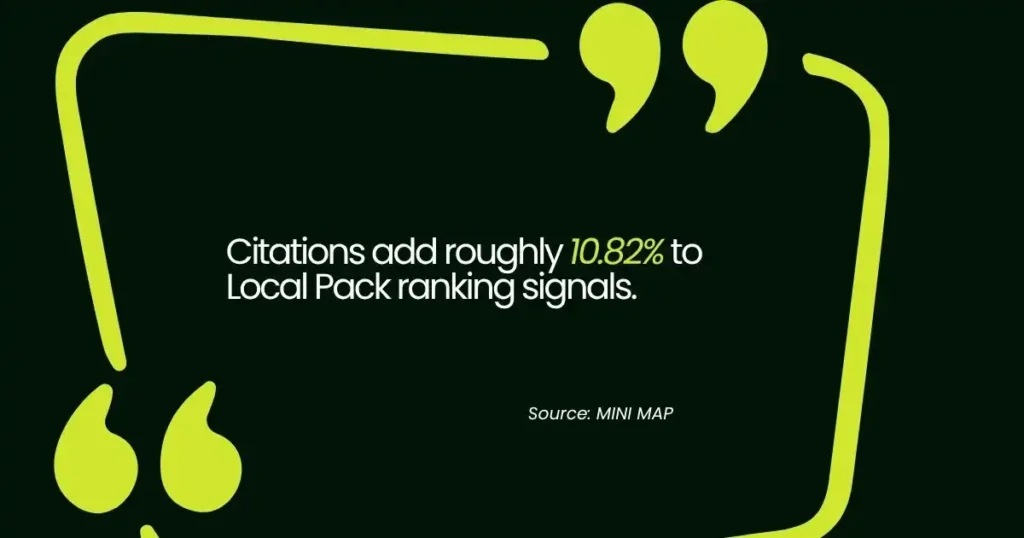
Citations add roughly 10.82% to Local Pack ranking signals, so a five-page search is not busywork, it is mapping out a real slice of your ranking potential before you touch a single listing. Businesses that skip this step often end up correcting the same five directories repeatedly while a dozen smaller ones sit untouched in the background.
2. Run A Free Citation Scan With A Tool
Run a free scan through BrightLocal or Whitespark to catch listings manual search misses as part of your directory listings SEO process. A scan surfaces the citations buried too deep for a manual Google search to reach.
These tools typically flag:
- Duplicate listings created under slightly different business name spellings
- Old addresses still live on smaller regional directories
- Phone numbers tied to a previous provider or forwarding service
- Listings with missing categories or incomplete NAP fields
- Aggregator-sourced profiles pulling from an outdated master record
Combine this list with the one from the manual search and you get a full picture of every place your NAP data lives, which is the only way to know the correction job is actually complete rather than partially done.
3. Fix Your Top Four High-Impact Platforms
Correct your Google Business Profile, Bing Places, Apple Maps, and Facebook first, since these carry the most direct local search weight. These four platforms feed the search engines and map apps people use most, so fixing them first delivers the fastest visible impact before moving on to smaller directories.
| Platform | Why it comes first |
| Google Business Profile | Feeds the Local Pack and Google Maps directly |
| Bing Places | Powers Bing and Microsoft’s local search results |
| Apple Maps | Drives directions and local search on iOS devices |
| High-traffic secondary source Google cross-checks against |
4. Correct The Data Aggregators Next
Fix the major data aggregators, Data Axle and Localeze, so corrected information does not get overwritten by old data flowing back through those feeds. Skipping this step undoes the first three. A plumbing company once corrected its Google Business Profile and Facebook listing, only to see the old phone number reappear on both platforms two months later. The cause traced back to Data Axle, which still held the outdated record and kept redistributing it to smaller directories that fed back into Google’s data sources.
Correcting the aggregator first would have stopped the old number from resurfacing at all. Aggregators sit upstream of dozens of smaller directories, so one uncorrected record there can quietly undo weeks of manual cleanup on the platforms below it.
5. Recheck Listings In Four To Six Weeks
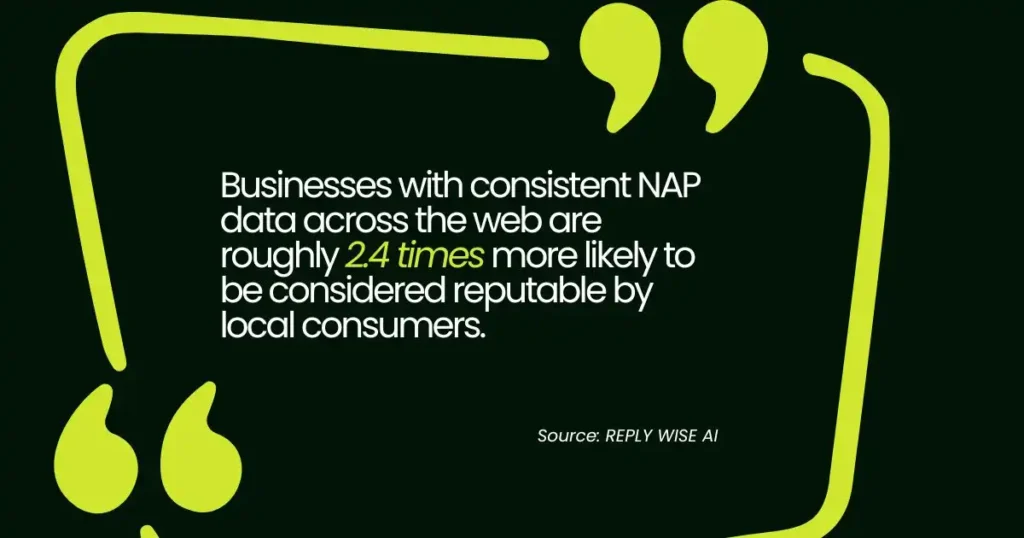
Recheck in 4 to 6 weeks, since directories take 1 to 7 days to update internally before Google recrawls the source. Patience here pays off in trust, not just rankings. Businesses with consistent NAP data across the web are roughly 2.4 times more likely to be considered reputable by local consumers, and that reputation signal builds gradually as directories update and Google reprocesses each corrected source, not the moment you hit save on a listing.
Set a calendar reminder for the recheck instead of relying on memory. Rerunning the same scan from step 2 at the 4 to 6 week mark shows exactly which corrections have taken hold and which listings still need a follow-up push, especially the smaller directories that tend to lag behind the majors.
Does Citation Building Still Matter With AI Search Growing?
Yes, and the evidence points in the opposite direction of the “citations are dead” claim that circulates in SEO forums. BrightLocal’s most recent local SEO ranking factors research found citation signals have remained steady year over year for traditional local search, and they carry added weight for AI and LLM-based local search visibility specifically. That means citations for local SEO now matter for two search systems, not one.
That means structured citations and unstructured mentions on third-party sites now do double duty. They support your position in the traditional Local Pack while also feeding the data language models pull from when answering local search queries directly, without a business ever clicking through to Google.
Take a local SEO agency with matching NAP details across its Google Business Profile, Clutch listing, and a chamber of commerce directory. When someone asks an AI assistant to “find an SEO agency near me with good reviews,” the model is cross-referencing those three independent sources against each other, not pulling from one unverified listing. The consistent match is what gets that agency recommended over a competitor whose address or phone number differs across platforms.
Build A Citation Profile That Holds Up Over Time
NAP inconsistency is rarely a one-time mistake. It creeps back in after an office move, a new phone system, or a rebrand, and it keeps creeping in until someone builds a repeatable audit process around it. Citation building sits under Off Page SEO Services since it earns trust through third-party mentions rather than changes to your own site. Start by defining one master NAP record that matches your Google Business Profile exactly, down to abbreviations like “St.” versus “Street.”
If managing citations for local SEO across multiple locations or client accounts is pulling you away from other priorities, Sam SEO Philippines helps businesses in the Philippines and internationally run NAP audits, correct listings at scale, and build citation profiles that protect rankings instead of quietly working against them. Contact us today, and let’s put that strategy in place.
Frequently Asked Questions About NAP Consistency And Citations
How much does citation management cost?
Pricing depends on how many locations you manage and how many existing citations for local SEO need correcting, since a single-location business with a handful of inconsistent listings costs far less to clean up than a multi-location brand with hundreds of scattered directory entries. Most agencies price citation work as either a one-time audit and cleanup fee or an ongoing monthly retainer that includes monitoring for new inconsistencies.
The monthly option tends to make more sense for businesses that move locations, change phone providers, or rebrand often, since those events are exactly what causes NAP data to drift again after the first cleanup. Sam SEO Philippines scopes citation work based on your current listing count and business complexity, so the quote reflects the actual cleanup involved rather than a flat rate.
Should I hire an agency or manage citations myself?
Handling directory listings SEO for a single-location business is realistic to do yourself with a free BrightLocal or Whitespark scan and a few hours of manual correction. The calculation changes once a business operates across multiple locations, manages several client accounts, or simply does not have the time for ongoing citation building and to chase aggregator delays every few weeks.
An agency brings established relationships with data aggregators, a repeatable audit process, and the bandwidth to monitor listings on an ongoing basis rather than fixing them once and forgetting about them. Sam SEO Philippines handles citation management for businesses that would rather focus on running the business than tracking down every directory their old address ended up in.
How do I know if my business needs a citation audit right now?
A few warning signs make the case clear. Customers mentioning they called an old number, reviews referencing a wrong address, or a recent office move, phone switch, or rebrand are all strong indicators that your NAP data has drifted out of sync somewhere online.
Businesses that have never run a citation audit, or haven’t run one in over a year, are also good candidates, since directory data quietly degrades over time even without a major business change. A free scan through BrightLocal or Whitespark takes about ten minutes and will confirm whether the problem is minor or widespread before you commit to a paid cleanup.
Can Sam SEO handle multi-location citations?
Yes, Sam SEO Philippines manages NAP audits and citation corrections for single-location businesses, multi-location brands, and agencies handling several client accounts at once. Work is scoped around how many locations or accounts are involved, so a five-location retail chain gets a different process than a single local service business, but both get the same master-record approach and platform-priority sequence.
Ongoing monitoring is available for businesses that want inconsistencies caught and corrected before they affect rankings, rather than discovered months later through a customer complaint. Contact Sam SEO Philippines to get a scope and quote based on your specific number of locations or accounts.