
One star. No warning. A public complaint is now sitting on your Google Business Profile where every potential customer can see it. Ignore it for too long, and that single review could cost you business before someone even visits your website. In fact, 89% of consumers prefer businesses that respond to all reviews, making every unanswered review a missed opportunity to build trust.
Knowing how to respond to a negative Google review goes beyond protecting your reputation. Google considers review activity, freshness, and engagement as part of its local search signals, so every response helps shape how customers and search engines view your business. A calm, professional reply often carries more weight than the negative review itself.
One poor review does not define your business. Your response can. The seven strategies below will show you how to turn negative feedback into an opportunity that strengthens customer confidence and supports your local SEO.
Why Negative Google Reviews Matter For Local SEO
Google looks beyond star ratings when ranking local businesses. It also looks at reply activity, response speed, and engagement signals. While review management plays a major role, it’s only one part of a strong local search strategy. A complete Technical SEO foundation also helps Google crawl, index, and understand your website more effectively.
That’s why knowing how to respond to a negative Google review deserves a real strategy, not a rushed comment written in frustration. Every reply becomes part of your online reputation SEO profile, visible to anyone who searches your business name for years afterward.
How To Respond To A Negative Google Review: 7 Steps To Follow
A single negative review does not have to define how customers see your business. What actually matters is how you handle it in the minutes and days after it lands. Here are seven steps that turn a bad rating into proof that you’re paying attention.
1. Up Alerts Across Every Review Platform
Visibility is the foundation of every response, you can’t manage a review you never see.
Negative review management starts with visibility. You cannot respond to a review you never see, and a negative comment left unanswered for weeks does more damage than one addressed within a day.
Turn on notifications for Google Business Profile, Yelp, Facebook, and any industry-specific platforms relevant to your niche. Set aside 15 minutes each week to scan every channel manually as a backup, since notifications occasionally fail to fire.
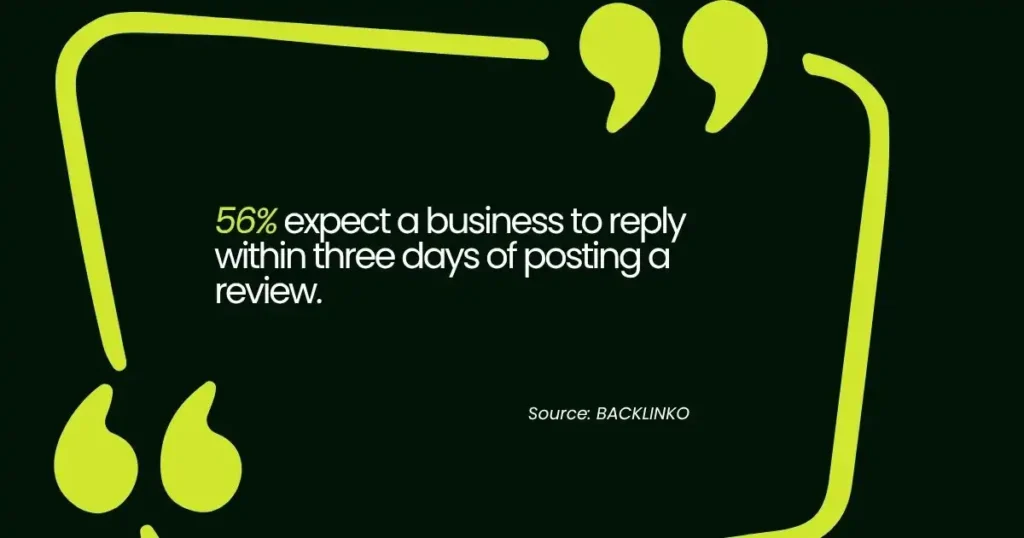
Speed backs this up: just over half of consumers, 56% expect a business to reply within three days of posting a review, according to Backlinko’s review data roundup. Miss that window and the silence itself becomes part of the story other readers see.
2. Pull The Full Story From Your Own Records
Your own records are the fastest gut check against a review that doesn’t add up. Before typing a single word, check your internal records. Look at order history, appointment logs, or staff notes tied to the customer’s name or the timeframe mentioned in the review.
Checking first protects you from Google review replies that contradict facts you did not have when you first read the complaint. A reply built on verified details reads as credible to everyone else browsing your listing, not just the original reviewer.
Example: a bakery gets a one-star review claiming an online order “never showed up.” A quick look at the fulfillment log shows the order was picked up in-store two hours after it was ready, under a name that doesn’t match any account on file. That single detail changes the entire reply, from an apology and refund to a polite request for the correct order number.
A few minutes of digging, and you’re replying with facts instead of guesses.
3. Lead With Acknowledgment, Not Justification
How you open your reply decides whether the conversation cools down or escalates. Defensive language is the fastest way to turn one unhappy customer into a bigger problem. Avoid phrases that blame the customer, minimize their experience, or over explain your internal processes.
Review response tips that consistently work start with a short acknowledgment. Thank the reviewer for the feedback, validate that their experience fell short, and state plainly that you want to make it right. Save the details for a private follow up.
| Instead of this | Try this |
| “That’s not what happened.” | “We’re sorry your experience didn’t match what we aim for.” |
| “You should have told us sooner.” | “Thanks for flagging this, we’d like the chance to make it right.” |
| “We followed our standard procedure.” | “We’re looking into exactly what went wrong on our end.” |
The words change, but the message stays the same: you heard them, and you’re on it.
4. Three To Four Sentences Is Enough
Brevity is a feature here, not a shortcut, a tight reply reads as confidence, not neglect.
A public reply does not need to resolve everything on the page. Its job is to show future customers that you responded professionally and that a resolution is already underway.
Keep the public comment brief, then invite the reviewer to continue by phone or email. Google review replies that stay short and direct read cleaner to prospective customers scrolling through your profile.
- Sentence 1: thank the reviewer for taking the time to leave feedback
- Sentence 2: acknowledge the specific issue they raised, by name
- Sentence 3: state the fix, or invite them to continue the conversation offline
- Optional sentence 4: leave a direct contact method (phone, email, or a name)
Four lines, no more, and the reply already looks like it came from someone who has this handled.
5. Offer A Concrete Next Step
A generic apology closes nothing; a specific next step reopens the relationship.An apology alone rarely brings a customer back. Give them a specific reason to try you again, whether that is a discount, a free follow up service, or a direct line to a manager who can resolve the issue personally.
When the situation is resolved, many reviewers will update their original rating or add a follow up comment. That outcome does more for negative review management than any amount of public back and forth ever could.
The offer matters more than the size of it. A modest discount attached to a real point of contact will out-perform a generous discount buried in vague language, because the reviewer needs to see exactly who to call and what happens next, not just that you’re sorry.
6. Know The Signs Before You Report
Not every negative review deserves a reply, some deserve a report instead. Not every one star review comes from a real customer. Watch for vague language, no mention of an actual product or service, or an account with a pattern of similarly aggressive reviews across unrelated businesses.
If you cannot find any record of the reviewer in your systems, use Google’s built in flagging tool to request removal. Responding calmly while the report is under review still matters, since other readers cannot tell which reviews are disputed.
Example: an HVAC company received five one-star reviews within a single hour, each mentioning “poor service” but never a technician, appointment, or invoice number. None matched a customer in the scheduling system. Flagged as likely fake, three of the five were removed by Google within two weeks.
Trust your own records over the star rating; that’s what tells you whether you’re dealing with a customer or a pattern.
7. Make Asking For Reviews Part Of Every Transaction
The best defense against a bad review is a steady stream of good ones. The businesses that handle how to respond to a negative Google review well are usually the same ones actively generating positive reviews in parallel. A strong base of recent five star feedback reduces how much weight any single complaint carries.
Ask satisfied customers for a review immediately after a good experience, through a text message, receipt link, or email follow up. A consistent stream of new reviews strengthens local SEO reputation far more reliably than chasing a perfect star rating.
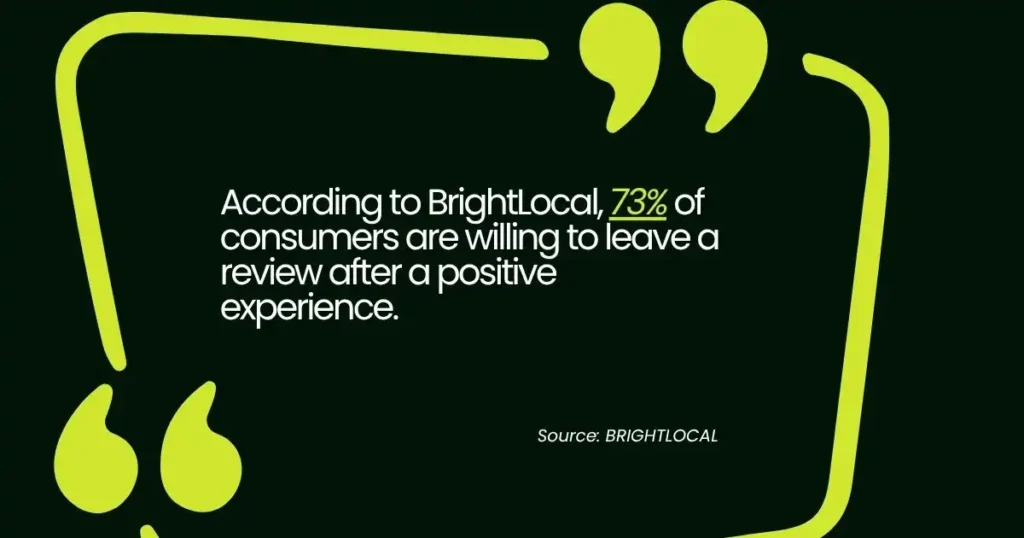
It works because people respond to being asked. According to BrightLocal, 73% of consumers are willing to leave a review after a positive experience if they’re asked, making the task itself one of the most rewarding habits in review management. It works because people respond to being asked.
Turn Every Google Review Reply Into A Local SEO Reputation Win
Negative reviews are not going away, and treating each one as a threat instead of an opportunity is where most businesses lose ground. Consistent negative review management, paired with genuine review response tips like the ones above. Building a trusted online reputation extends beyond Google reviews. Combining review management with Off Page SEO Services helps strengthen your authority through quality backlinks, brand mentions, and other external trust signals.
If managing Google review replies across multiple locations or clients is pulling you away from other priorities, Sam SEO Philippines helps businesses in the Philippines and internationally build review management systems that protect rankings and reputation at the same time.
Contact Sam SEO Philippines today, and let’s put a review management strategy in place that actually holds up over time. We’ll handle the monitoring, the responses, and the reporting, so nothing slips through while you’re busy running the business.
Frequently Asked Questions About Responding To Negative Reviews
What is the best way to respond to a negative Google review?
The best approach combines a fast response, a short public acknowledgment, and a private follow up to resolve the issue. Speed matters because a quick reply signals that your business actually pays attention to feedback, and it stops the review from sitting unanswered for weeks while more people see it. Keep the public portion brief and professional, and move the details back and forth to email, phone, or DM so the conversation doesn’t turn into a public argument.
Avoid defensive language no matter how unfair the review feels at the moment. Future customers will read the reply long after the original complaint fades, so the response is really being written for them, not just for the unhappy reviewer. A calm, solution focused tone shows prospective customers how you handle problems, which often matters more to them than the original complaint itself.
Can responding to reviews affect my local SEO ranking?
Yes. Google treats review responses as part of your overall prominence signal, alongside review volume and recency. Prominence is one of the three core local ranking factors, and an active review response habit gives Google (and searchers) evidence that your business is engaged, legitimate, and actively managed rather than dormant.
Businesses with strong local SEO reputation habits, including regular replies, tend to hold local pack positions longer than businesses that stay silent. This isn’t about one single review moving the needle. It’s the cumulative pattern of consistent engagement that builds trust signals over time, which is exactly the kind of steady behavior Google’s local algorithm rewards.
Does responding to a negative review guarantee the customer will change their rating?
No, but it significantly improves the odds. Many reviewers update their star rating or add a follow-up comment once they see their complaint was taken seriously and resolved, even if they never expected a reply in the first place. A thoughtful response often surprises people, especially if they left the review expecting to be ignored.
That said, some customers won’t change their rating regardless of how well you handle it, and that’s fine. The real win isn’t always getting the star bumped up. It’s making sure anyone else who reads the thread sees a business that responds well under pressure, which does far more for your reputation than a single edited rating ever could.
Should the same person always respond to reviews, or can it rotate through the team?
It’s best to keep review responses consistent in tone, even if different people handle them day to day. Customers and prospective customers notice when replies feel inconsistent, overly casual in one, stiff and corporate in the next. That inconsistency can undercut the professional impression you’re trying to build with every other reply.
A shared response guide or a few approved templates help every reply sound like it’s coming from one steady, professional voice rather than several different ones. This doesn’t mean every response has to be copy-pasted. It just means everyone on the team is working from the same tone, structure, and set of do’s and don’ts, so the voice stays recognizable no matter who’s typing.
What should I do if a negative review contains false information?
Correct the record calmly and factually in your public reply, without accusing the reviewer of lying. Even if you’re confident the claim is inaccurate, an accusatory tone tends to backfire publicly, since readers can’t verify who’s right and often side with whoever sounds more reasonable.
State the accurate details you can verify, such as dates or service records, and invite them to follow up privately if they’d like to discuss it further. This keeps the public reply short, factual, and free of drama, while still giving the reviewer a path to resolve things directly with you. If the review violates Google’s policies outright, like referencing a service you never provided, it may also be worth flagging it for removal through Google’s review reporting process.